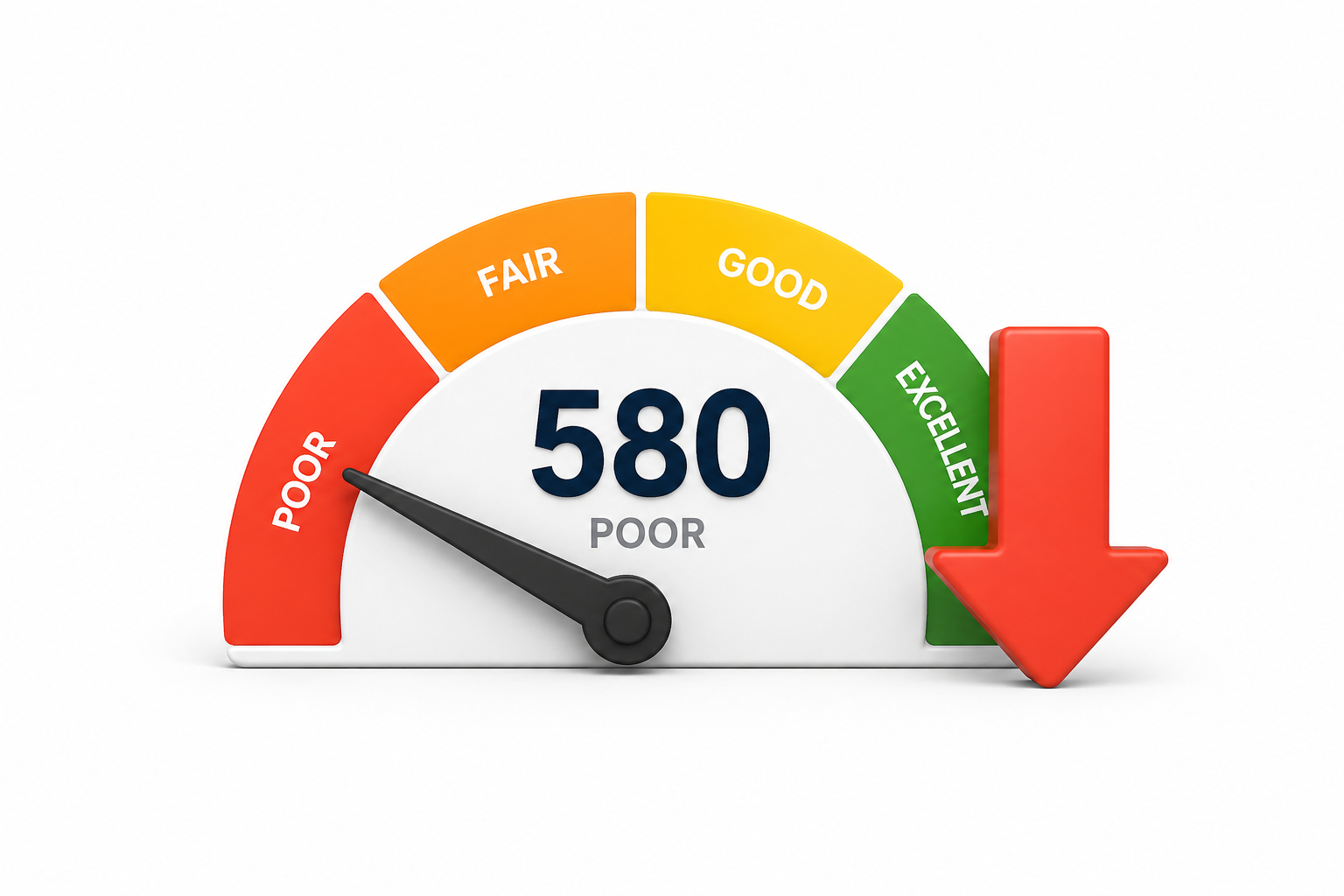
If your credit score dropped and you are not sure why, you are not alone.
This is one of the most common questions people have when they check their credit. The good news is that scores usually do not drop for no reason. Something changed, and once you identify it, you can start taking the right next steps.
If you want a guided way to understand your report and take action, you can learn more about how The Dispute Coach works.
Important: A credit score drop does not always mean you did something wrong. Sometimes it is caused by new reporting, balance changes, account updates, or timing between creditors and the bureaus.
Most Common Reasons Your Credit Score Dropped
1. A New Late Payment Was Reported
Even one late payment can have a noticeable impact, especially if you previously had a strong payment history.
If you see a late payment that seems inaccurate, you may need to review it closely and consider disputing it.
2. Your Credit Utilization Went Up
If your credit card balances increased, your score may drop even if you made your payments on time.
This happens because utilization is a major scoring factor. The more of your available credit you are using, the more risk lenders may see.
3. A Collection Account Was Added
A new collection account is one of the biggest reasons for a sudden score decrease.
If that happened, it is smart to review your options and read how to remove collections from your credit report.
4. An Account Was Closed
When an account closes, your available credit may go down. That can increase your utilization ratio and hurt your score, even if the closure was expected.
5. You Applied for New Credit
Hard inquiries can cause a temporary dip, especially if you had multiple applications within a short period of time.
6. Negative Information Finally Reported
Sometimes the issue is not new behavior. It is delayed reporting. A creditor may update an account weeks later, which can make the score drop seem sudden.
What If You Are Getting Ready to Buy a Home?
If your score dropped while preparing for a mortgage, timing matters a lot.
Lenders may look more closely at your report as you move toward underwriting and final approval. In some situations, they may also ask you to remove certain dispute comments before closing.
If that applies to you, read How to Remove Dispute Comments Before Closing on a House.
You may also want to review what credit score you need to buy a house in 2026 so you understand what lenders may be looking for.
What Should You Do Next?
Step 1: Review Your Full Credit Report
Do not rely on the score alone. Review all three bureaus and look carefully at balances, payment history, collections, comments, and recently updated accounts.
Step 2: Identify What Changed
Compare your current report to what you saw previously. Look for:
- new late payments
- higher balances
- new collection accounts
- closed accounts
- new inquiries
Step 3: Take Strategic Action
This is where people often make mistakes. Panic can lead to bad decisions.
- do not dispute everything blindly
- do not ignore the change and hope it fixes itself
- do not assume paying something automatically removes it
The goal is not just to act. The goal is to act strategically.
If you need help understanding your options, The Dispute Coach was built to help you move through that process with structure and clarity.
Should You Handle It Yourself or Get Help?
Some people are comfortable digging through their report and taking action on their own. Others prefer guidance and a more structured system.
If you are trying to figure out what fits you best, read DIY Credit Repair vs. Done-for-You Credit Repair.
That can help you decide whether you want a more hands-on approach or more direct support.
Will Your Credit Score Go Back Up?
In many cases, yes.
Once you identify the issue and take the right steps, your score can begin to recover. How quickly that happens depends on the cause, the severity, and what action you take next.
The most important thing is not to react emotionally. A drop in your score is a signal that something changed. Once you understand that change, you can build a plan.
Final Thoughts
A credit score drop does not mean you are stuck. It means something on your report needs attention.
The sooner you understand what changed, the sooner you can decide whether to correct it, dispute it, pay it down, or work through a smarter strategy.
Want a clear way to review your credit and take the next step? The Dispute Coach helps you understand what changed and move forward with confidence.